RESEARCH-GRADE PEPTIDES BY PURE CHAIN WORKS – EXCEEDS 99% PURITY!
RESEARCH-GRADE PEPTIDES BY PURE CHAIN WORKS – TRUSTED BY SCIENTISTS!

PCW Blog • Lab Standards
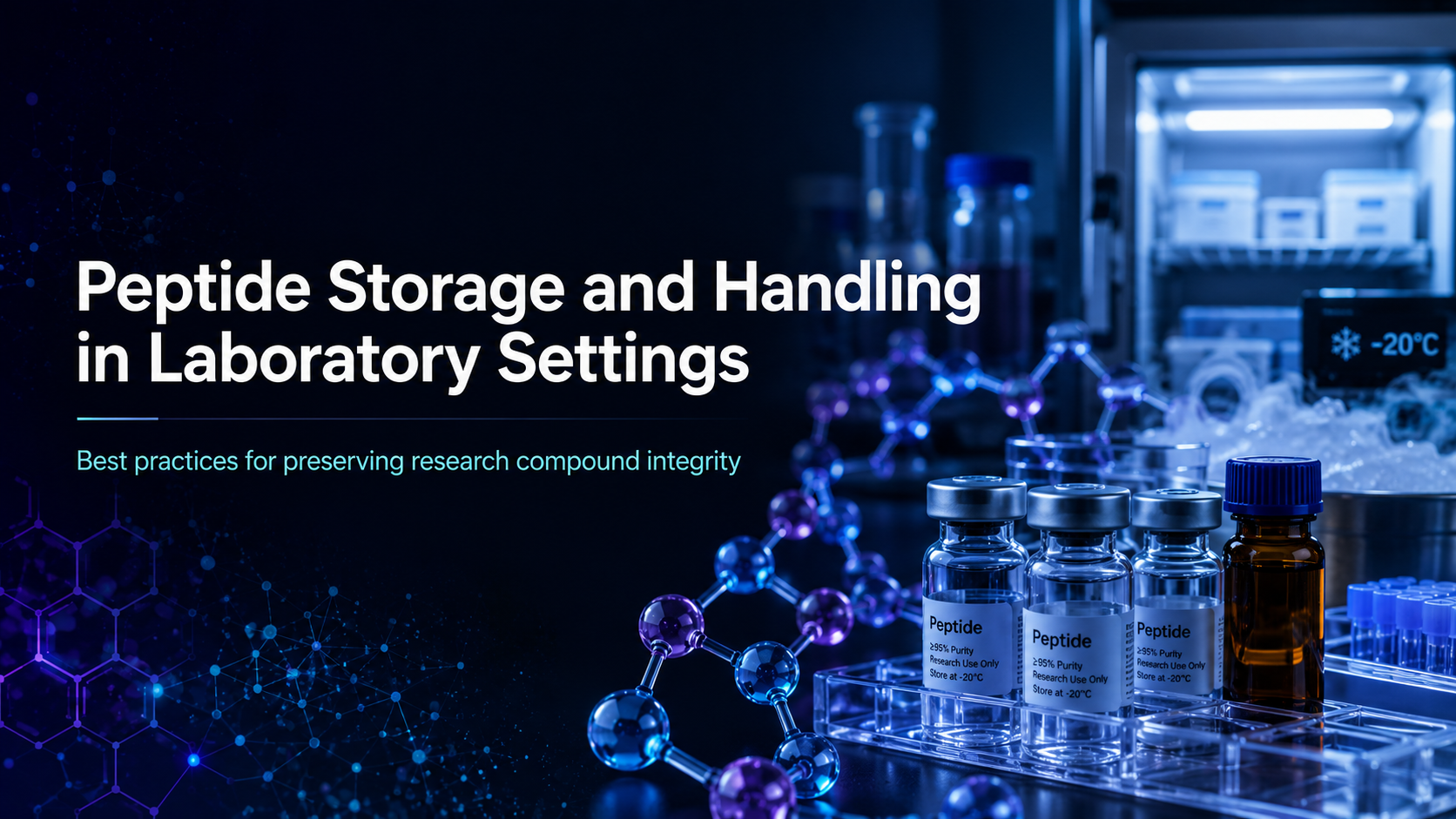
Proper storage and handling help protect peptide integrity, reduce avoidable degradation, and support cleaner, more consistent research workflows.
In laboratory research, the quality of a peptide is only one part of the equation. Even well-documented research materials can be compromised if they are stored incorrectly, exposed to unsuitable conditions, or handled without a clear workflow.
Peptides are often sensitive research materials. Their stability can be affected by temperature, moisture, light exposure, contamination, and repeated handling. For this reason, careful storage and handling are essential for laboratories that want to protect sample integrity and maintain reliable results.
Key principle: Peptide handling should always follow the supplier’s documentation, the laboratory’s internal protocols, and relevant institutional safety procedures.
Many peptides are supplied in lyophilised form, meaning they are freeze-dried to support stability during storage and transport. However, lyophilised does not mean indestructible. Exposure to humidity, heat, and repeated temperature changes can still affect long-term quality.
Laboratories should review storage guidance carefully when receiving a peptide. This may include temperature requirements, protection from light, container handling instructions, and any recommendations for short-term or long-term storage.
Moisture is one of the most common risks when handling sensitive research compounds. If a vial is repeatedly opened, left at room temperature, or exposed to humid conditions, the material may absorb moisture from the environment.
To reduce this risk, laboratories often allow sealed vials to reach a suitable working temperature before opening, minimise exposure time, and ensure containers are closed properly after use. Clean, dry, controlled environments are important for maintaining sample quality.
A strong peptide workflow should be simple, repeatable, and well documented. The aim is not to make the process complicated, but to reduce unnecessary variation between experiments.
Repeated freeze-thaw cycles can be a concern for many sensitive compounds. When a sample is frozen, thawed, used, and then frozen again multiple times, the repeated stress may affect consistency.
For this reason, many laboratories plan their workflow in advance and prepare smaller working portions where appropriate under approved protocols. This can help reduce repeated exposure and make experiments easier to track.
Good storage and handling are not only physical processes. They are also documentation processes. Researchers should be able to look back and understand exactly when a material was received, where it was stored, how it was prepared, and how it was used.
This level of organisation helps laboratories identify possible sources of variation. If results differ between studies, storage and handling records can help determine whether material conditions may have played a role.
Peptide research depends on consistency. Proper storage and handling help protect compound integrity and support more reliable interpretation of laboratory results. By combining quality materials with careful workflows, researchers can reduce avoidable errors and build stronger experimental practices.
A good laboratory approach is simple: verify the material, follow the documentation, control the environment, reduce unnecessary exposure, and keep clear records from receipt to final use.
Disclaimer: This content is provided for educational research purposes only. It is not medical, clinical, or personal-use guidance. Research compounds should only be used by qualified professionals in appropriate laboratory settings.

All products on this website are intended strictly for laboratory research purposes.
The materials offered by Pure Chain Works are not intended for human or animal consumption and must not be used for diagnosing, treating, curing, or preventing any disease.By clicking “Agree”, you confirm that:
(1) you are at least 21 years of age; (2) you are a qualified researcher or laboratory professional; (3) you understand that all products are for research use only; (4) you will not use these products for human or animal consumption; (5) you accept full responsibility for compliance with all applicable laws and regulations and agree to the website policies.
Your access is restricted because of your age.
Discount Applied Successfully!
Your savings have been added to the cart.