RESEARCH-GRADE PEPTIDES BY PURE CHAIN WORKS – EXCEEDS 99% PURITY!
RESEARCH-GRADE PEPTIDES BY PURE CHAIN WORKS – TRUSTED BY SCIENTISTS!

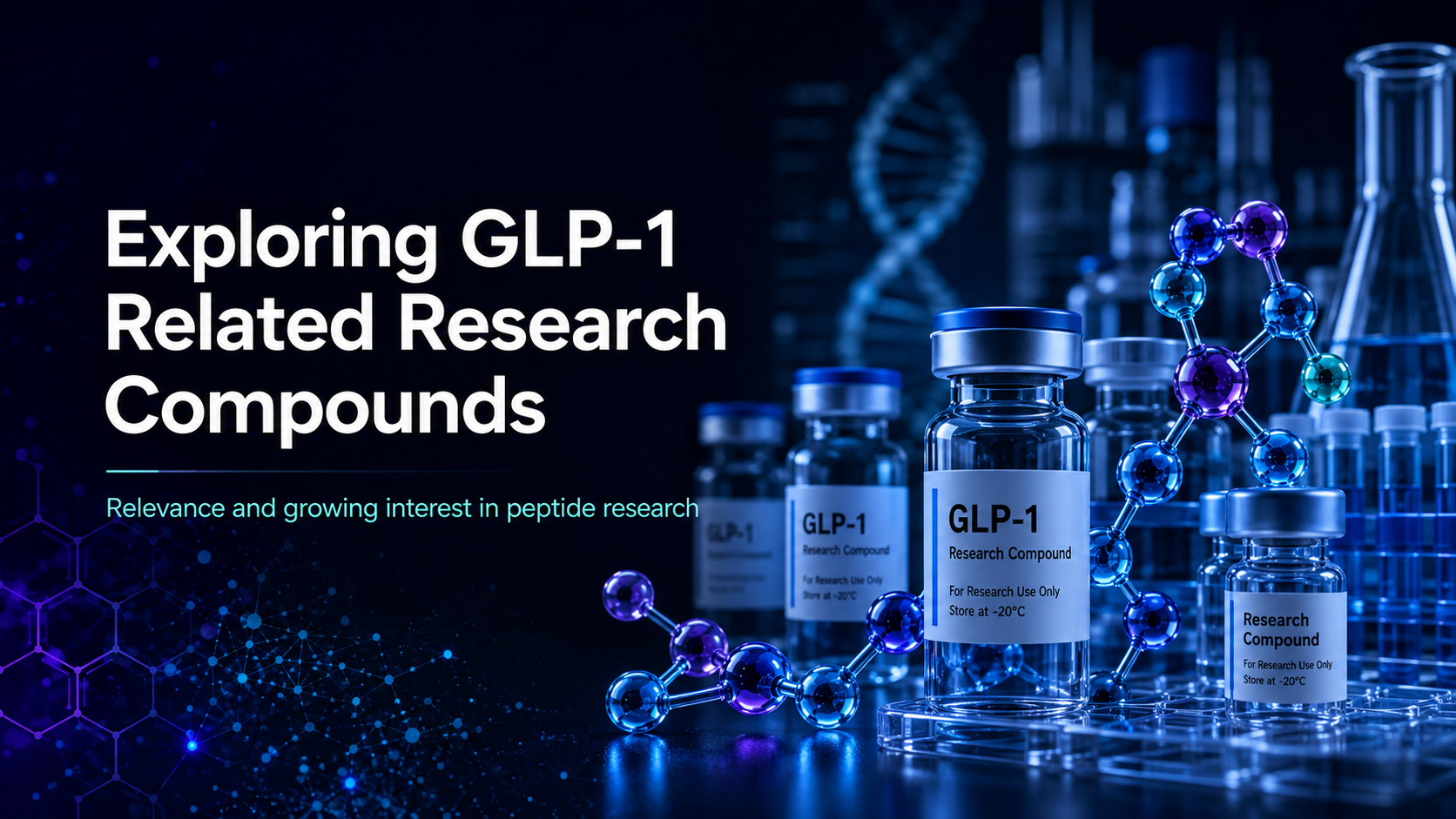
PCW Blog • Compound Spotlight
GLP-1 related compounds continue to attract attention in laboratory research because of their relevance to signalling pathways, metabolic studies, and receptor-focused investigation.
GLP-1 related research compounds have become a major area of interest in laboratory studies. Researchers examine these compounds because of their connection to biological signalling, receptor activity, and broader metabolic research models.
This article provides a research-focused overview of why GLP-1 related compounds are widely discussed, what makes quality and documentation important, and how laboratories can approach this category responsibly.
Important note: This article is not medical advice and does not provide personal-use guidance. GLP-1 related research compounds should only be used for qualified laboratory research and are not intended for human consumption, treatment, diagnosis, or personal experimentation.
GLP-1 stands for glucagon-like peptide-1. In biological research, GLP-1 is studied because of its role in signalling pathways connected with metabolism, appetite-related mechanisms, glucose regulation models, and receptor activity.
Researchers may study GLP-1 related compounds to better understand how specific molecular structures interact with GLP-1 receptors or related pathways under controlled laboratory conditions. These investigations can help build knowledge around signalling behaviour, pathway response, and compound-receptor interaction.
The growing interest in this area is linked to the importance of metabolic signalling in modern biomedical research. Metabolic pathways are complex, and researchers often need precise tools to study how specific systems respond under defined experimental conditions.
GLP-1 related compounds may be included in research models where laboratories want to examine receptor selectivity, pathway activation, molecular stability, or comparative compound behaviour. However, responsible research requires careful interpretation. Laboratory findings should not be stretched beyond the limits of the study design.
Researchers may examine how a compound interacts with GLP-1 related receptor pathways under controlled experimental conditions.
GLP-1 related models can support investigation into signalling responses and metabolic pathway behaviour.
Laboratories may compare compound behaviour, structure, or response across different research conditions.
Reliable research depends on purity, identity verification, documentation, and consistent handling.
GLP-1 related research is a sensitive and highly specialised area. Because of this, documentation is essential. Researchers should review analytical data, batch records, and supplier-provided information before beginning any study.
A Certificate of Analysis can help support confidence in compound identity and purity. Proper documentation also helps laboratories maintain traceability, repeatability, and internal accountability.
Like many peptide-based research materials, GLP-1 related compounds may require careful storage and handling. Laboratories should protect materials from unsuitable environmental conditions and follow any supplier-specific guidance.
In practice, this means keeping clear records, using appropriate storage conditions, minimising unnecessary exposure, and ensuring that only trained personnel handle the material. Small workflow improvements can make a meaningful difference in research consistency.
Because GLP-1 related topics are widely discussed outside laboratory environments, it is especially important for research suppliers and laboratories to communicate responsibly. Research content should avoid personal-use instructions, unsupported claims, or language that encourages misuse.
A responsible approach keeps the focus on science, documentation, quality, and laboratory standards. It also makes clear that research compounds are not consumer products and should not be treated as such.
GLP-1 related research compounds continue to be studied because of their relevance to receptor activity, metabolic signalling, and controlled laboratory models. As interest grows, so does the need for careful sourcing, clear documentation, proper handling, and responsible communication.
For laboratories, the strongest approach is to combine scientific curiosity with disciplined research practice. Quality materials, transparent documentation, and careful protocols all help support more reliable outcomes.
Disclaimer: This article is for educational and laboratory research information only. It does not provide medical advice, dosing guidance, therapeutic claims, or personal-use instructions. Research compounds are not intended for human or veterinary use.

All products on this website are intended strictly for laboratory research purposes.
The materials offered by Pure Chain Works are not intended for human or animal consumption and must not be used for diagnosing, treating, curing, or preventing any disease.By clicking “Agree”, you confirm that:
(1) you are at least 21 years of age; (2) you are a qualified researcher or laboratory professional; (3) you understand that all products are for research use only; (4) you will not use these products for human or animal consumption; (5) you accept full responsibility for compliance with all applicable laws and regulations and agree to the website policies.
Your access is restricted because of your age.
Discount Applied Successfully!
Your savings have been added to the cart.